Deep Learning: The Future of Machine Learning

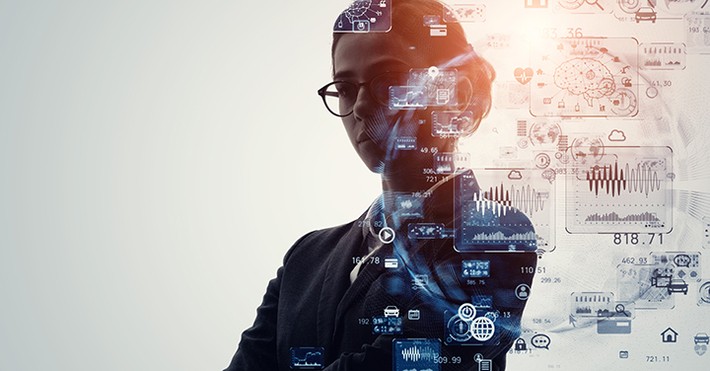
Deep learning is a subset of machine learning that uses artificial neural networks to learn from data. This is a powerful technique that has been used to achieve state-of-the-art results in a variety of tasks, including image recognition, speech recognition, and natural language processing.
Machine learning is a type of artificial intelligence (AI) that allows computers to learn without being explicitly programmed. This is done by feeding the computer a large dataset of data, along with the desired output. The computer then learns to map the input data to the output data.
Deep learning is a type of machine learning that uses artificial neural networks. Neural networks are inspired by the human brain, and they consist of a series of interconnected nodes. Each node in a neural network performs a simple calculation, and the output of each node is passed to the next node in the network.
The more data that a neural network is trained on, the better it becomes at performing its task. This is because the neural network learns to identify patterns in the data, and these patterns can be used to make predictions or decisions.
Deep learning has been used to achieve state-of-the-art results in a variety of tasks, including:
- Image recognition: Deep learning has been used to create systems that can recognize objects in images with high accuracy. This technology is used in a variety of applications, such as self-driving cars, facial recognition, and medical image analysis.
- Speech recognition: Deep learning has been used to create systems that can recognize speech with high accuracy. This technology is used in a variety of applications, such as voice assistants, dictation software, and call centers.
- Natural language processing: Deep learning has been used to create systems that can understand and process natural language. This technology is used in a variety of applications, such as chatbots, machine translation, and search engines.
Deep learning is a rapidly growing field, and it is sure to have a major impact on our lives in the years to come. This technology has the potential to revolutionize the way we interact with computers, and it could be used to solve some of the world’s most pressing problems.
Here are some of the benefits of deep learning:
- Accuracy: Deep learning models can be very accurate, especially when trained on large datasets.
- Scalability: Deep learning models can be scaled to large datasets, making them a valuable tool for businesses that need to process a large volume of data.
- Cost-effectiveness: Deep learning models can be cost-effective solutions for businesses that need to automate tasks that were previously done by humans.
- Real-time processing: Deep learning models can be used to process data in real time, making them a valuable tool for applications such as self-driving cars and fraud detection.
Here are some of the challenges of deep learning:
- Complexity: Deep learning models can be complex to train and deploy.
- Data requirements: Deep learning models require large datasets to train.
- Interpretability: Deep learning models can be difficult to interpret, which can make it difficult to understand how they make decisions.
Despite these challenges, deep learning is a powerful technology with a wide range of applications. As the technology continues to develop, we can expect to see even more innovative applications for deep learning in the years to come.
Some of the most promising future applications of deep learning include:
- Medical diagnosis: Deep learning can be used to analyze medical images and data to diagnose diseases with greater accuracy than human doctors.
- Financial trading: Deep learning can be used to analyze financial data and make predictions about the stock market.
- Self-driving cars: Deep learning is essential for self-driving cars to safely navigate their environment.
- Virtual assistants: Deep learning can be used to create virtual assistants that can understand and respond to natural language queries.
These are just a few of the many potential applications of deep learning in the future. As the technology continues to develop, we can expect to see even more innovative and groundbreaking applications.
I hope this article has helped you to understand the basics of deep learning and machine learning. If you are interested in learning more about this topic, there are a number of resources available online and in libraries.




Motorola Moto G14 Specs, Price, and Best Deals
The Motorola Moto G14 is a mid-range smartphone that was released in August 2023. It has a…