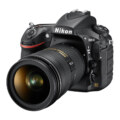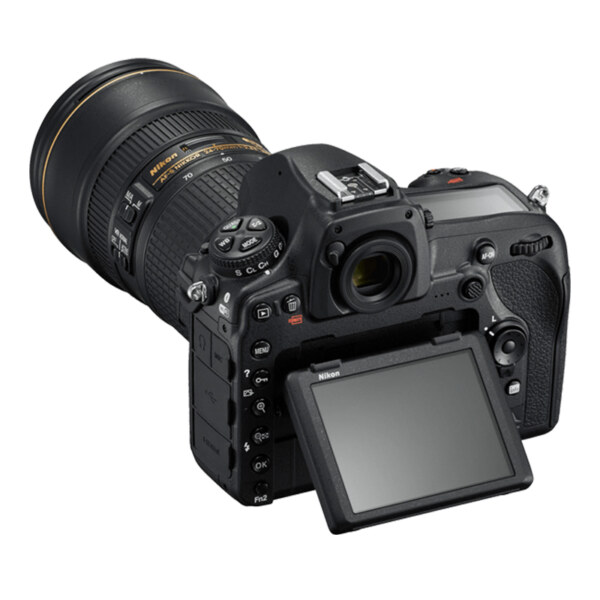


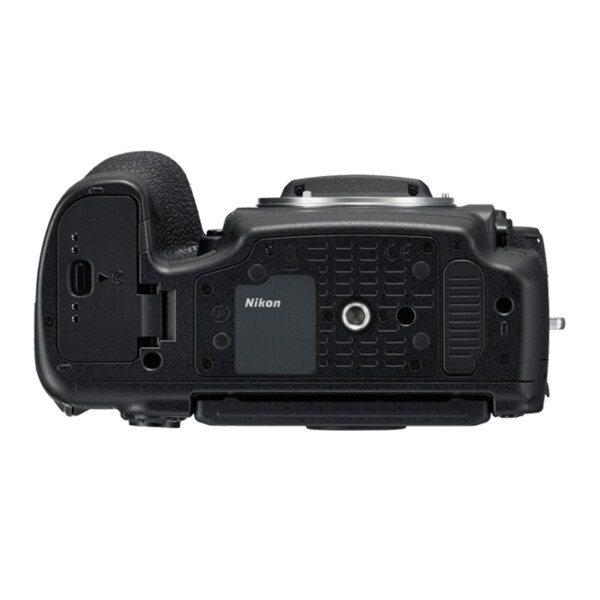
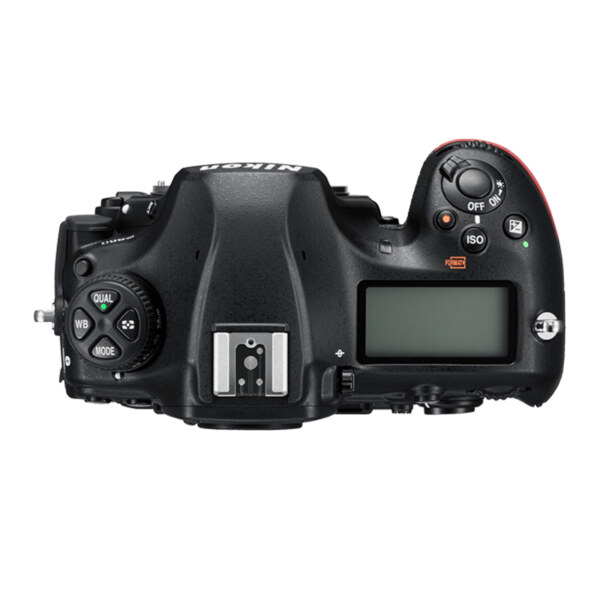

Nikon D850 DSLR Camera
When Nikon introduced the D800 and D800E, it set a new benchmark for DSLR image quality and super high resolution photography that approached medium format. Now, five years later, Nikon proudly introduces the next evolution in high resolution DSLRs, a camera that allows photographers to capture fast action in 45.7 megapixels of brilliant resolution. With remarkable advancements across the board—sensor design, autofocus, dynamic range, sensitivity, Speedlight control, battery life, shutter and mirror drive mechanisms, Silent Photography in Live-View mode, focus shift capability and more—this is quite possibly the most impressive, well-rounded DSLR yet.
45.7 Megapixel Back-side Illuminated CMOS Sensor
At the heart of the D850 is a back-side illuminated (BSI) FX-format full-frame CMOS image sensor with 45.7 megapixels and no optical low-pass filter. A marvel of ingenuity, it achieves extraordinary image quality, enhanced light gathering efficiency, faster data readout and truer color with virtually no risk of moiré.
EXPEED 5 Image Processing
EXPEED 5 quickly processes all 45.7 megapixels of data for lower noise, wider dynamic range, subtle tonal and textural details, high-speed continuous shooting at approx. 9 fps1 and full-frame 4K UHD movie recording.
Dynamic Range Down to ISO 64
The lower the ISO, the greater the dynamic range. Like the D810 before it, the D850 has the lowest base ISO of any DSLR or mirrorless camera2—ISO 64 (expandable down to ISO 32).
Speed to Match Your Vision
With a continuous shooting speed of 7 fps or 9 fps using the optional MB-D18 battery pack with EN-EL 18b/a Lithium-ion Battery, the D850 can capture those perfect moments in action from a bride walking down the aisle to gravity-defying sports shots at it’s full 45.7 MP resolution.
120 fps Slow-Motion
Transform dramatic moments into dazzling fluid slow-motion sequences. Record 4x (shoot at 120p, playback at 30/25p) or 5x (shoot at 120p, playback at 24p) slow-motion at 1080p
Built-in Wireless Connectivity
Transfer images to a compatible smartphone or tablet instantly using Nikon’s SnapBridge app and the D850’s constant Bluetooth Low Energy connection.
Specs
Dimensions
| Height | 124mm |
| Width | 146mm |
| Depth | 79mm |
| Weight | 1015 grams |
DISPLAY
| Size | 3.2 inches |
FEATURES
Performance
| Water Resistant | No |
| Shock Resistant | Yes |
| Instant Print | No |
| Orientation Sensor | |
| Audio Recording | |
| Self Timer | Yes (2, 5, 10, 20 secs for up to 9 shots) |
| Shutter Speeds | 1/8000s - 30s |
Imaging
| Effective Megapixels | 46 megapixels |
| Optical Zoom | 5x |
| Optical Zoom Type | Automatic |
| Digital Zoom | 2x |
| Long Zoom | |
| Optical Image Stabilization | |
| Face Detection | |
| Brightness Control | |
| Burst Mode | |
| Image Resolution | 8256 x 5504 pixels |
| Image File Format(s) | JPEG, DCF 2.0, Exif 2.3, MRF, RAW, TIFF, NEF |
| Movie Mode | |
| Video Resolution | 2160p @30fps, 3840×2160 pixels |
Connectivity
| Bluetooth | Yes |
| Infrared <strong>Infrared</strong> connectivity is an old wireless technology used to connect two electronic devices. It uses a beam of infrared light to transmit information and so requires direct line of sight and operates only at close range. | |
| Wi-fi <strong>Wi-Fi</strong> is a popular wireless networking technology using radio waves to provide high-speed network connections that allows devices to communicate without cords or cables, Wi-Fi is increasingly becoming the preferred mode of internet connectivity all over the world. | Yes |
| Wi-fi Hotspot | |
| USB | USB 3.0 (5 GBit/sec) |
| GPS <strong>GPS</strong> The Global Positioning System is a satellite-based radio navigation system, GPS permits users to determine their position, velocity and the time 24 hours a day, in all weather, anywhere in the world, In order to locate your position, your device or GPS receiver must have a clear view of the sky. | No |
| NFC | No |
| HDMI <strong>HDMI</strong> (High-Definition Multimedia Interface) is a compact audio/video interface for transferring uncompressed video data and compressed or uncompressed digital audio data from a HDMI-compliant source device to a compatible computer monitor, video projector, digital television, or digital audio device. | |
| Wireless Charging <strong>Wireless Charging</strong> (Inductive Charging) uses an electromagnetic field to transfer energy between two objects. This is usually done with a charging station. Energy is sent through an inductive coupling to an electrical device, which can then use that energy to charge batteries or run the device. | No |
Reviews
Sorry, you have not permission to write review for this product.
Videos